
Pam Hawley Marlin November 2025
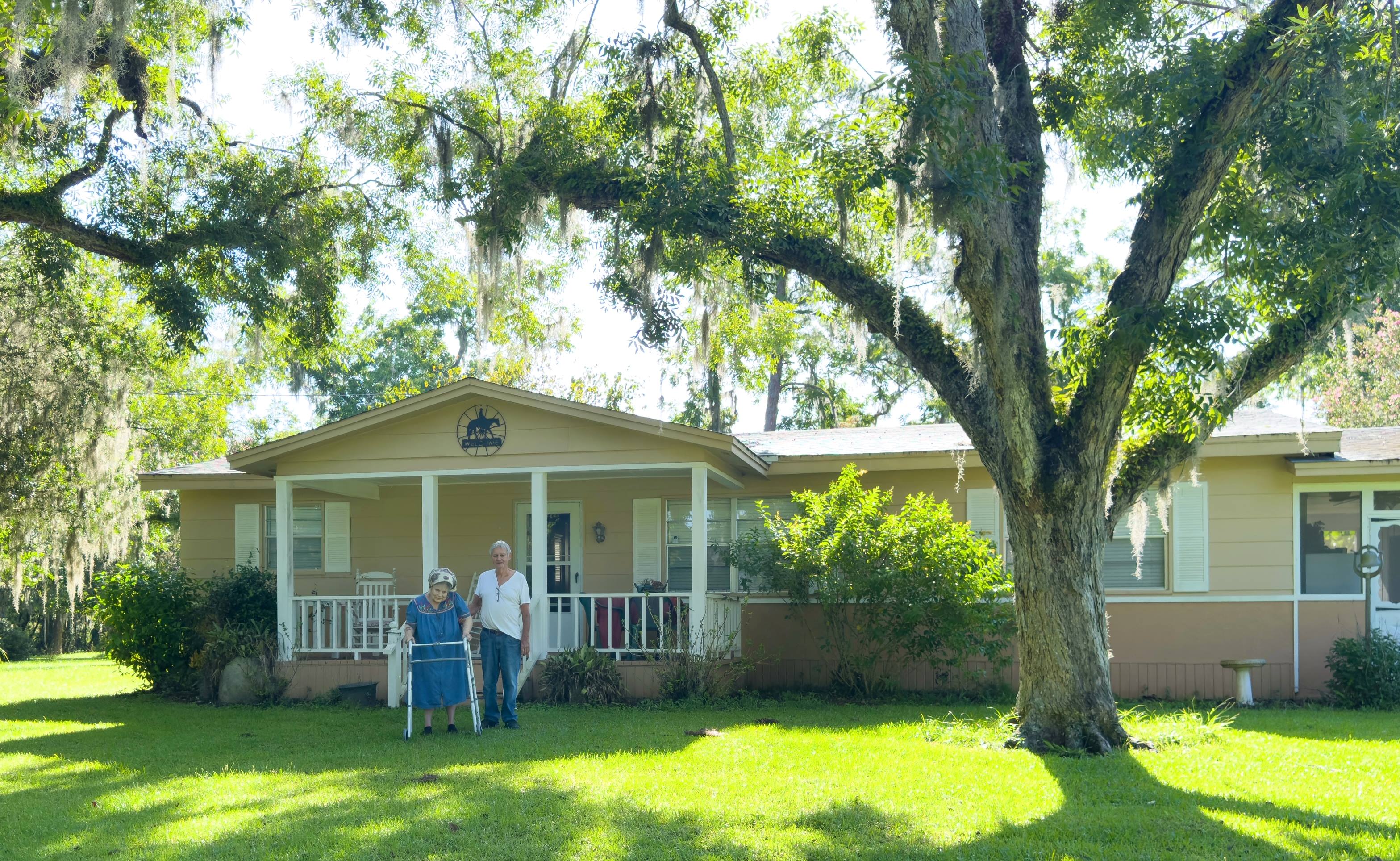 In amongst the pecan groves, a 60-year family homestead. My parents
pose in front of the home my grandparents purchased nearly 60 years ago.
In amongst the pecan groves, a 60-year family homestead. My parents
pose in front of the home my grandparents purchased nearly 60 years ago.
There’s something timeless about land, the way it roots a family, holds their stories, and carries the quiet echo of those who came before. For generations, my Hawley family has sought that sense of belonging through the land they tended. In 19th-century New York, my ancestors farmed the land along the Erie Canal, in Clarendon; in Michigan, they built farms on the edge of forest and prairie; and later, in Kansas, they turned open fields into homesteads and built tornado proof shelters. Each generation seemed to move a little farther, searching for its own piece of earth to call home.
By the time my grandfather, Calvin Hawley, also known as my "Papa," found his way to Florida in 1959, that legacy of land and labor was already part of our story. He was weary of the cold winters of southern Illinois, ready for warmth and new beginnings. A few years later, he found an old house east of Gainesville, nestled among an old pecan grove near Newnans Lake, a place that would become our family’s anchor for the next six decades.
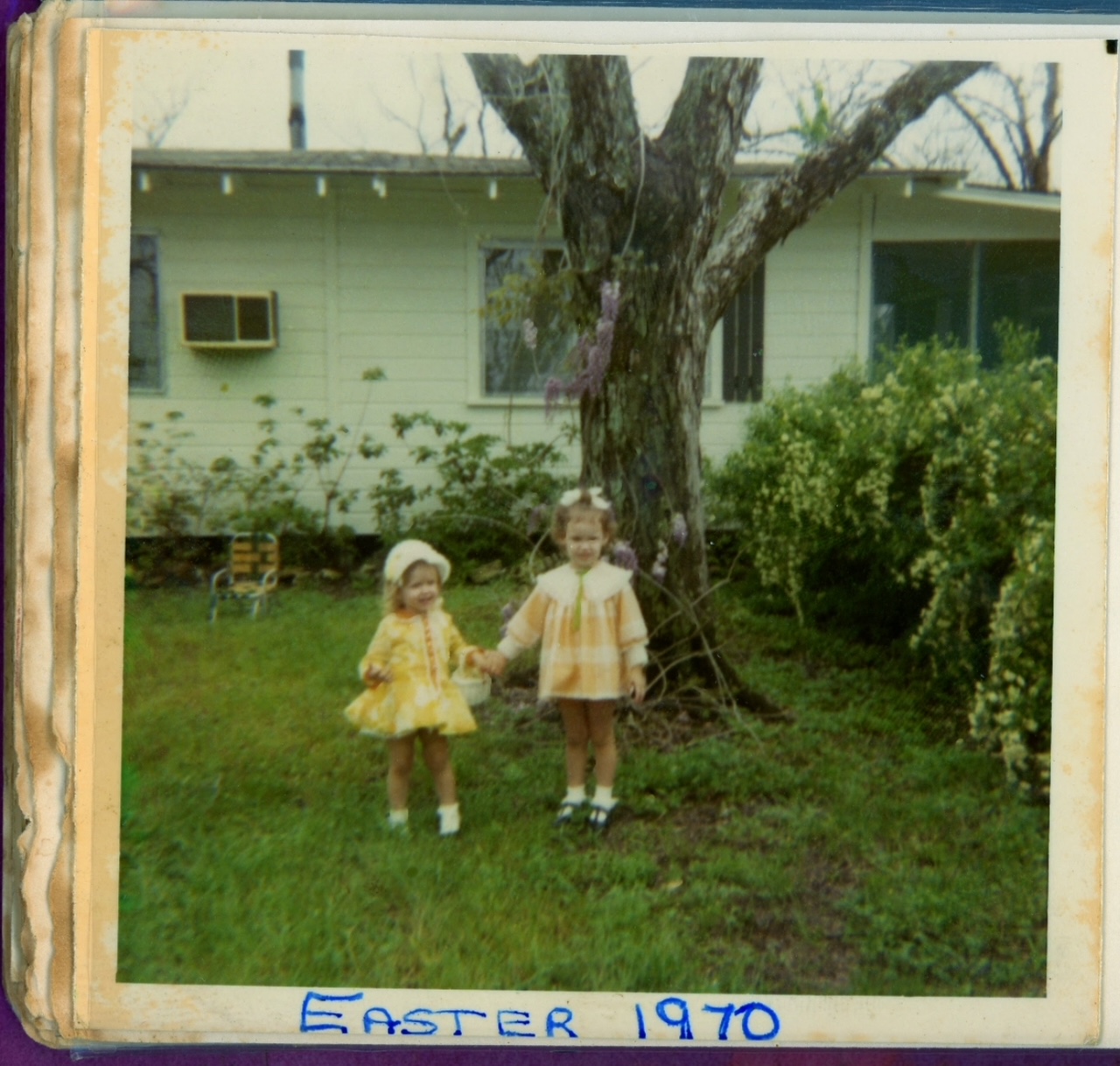 Me, with my cousin, photographed in front of the house during the family Easter party.
We are standing in front of the same tree that is located on the right in the photo above.
Then and now perspective
photos.
Me, with my cousin, photographed in front of the house during the family Easter party.
We are standing in front of the same tree that is located on the right in the photo above.
Then and now perspective
photos.
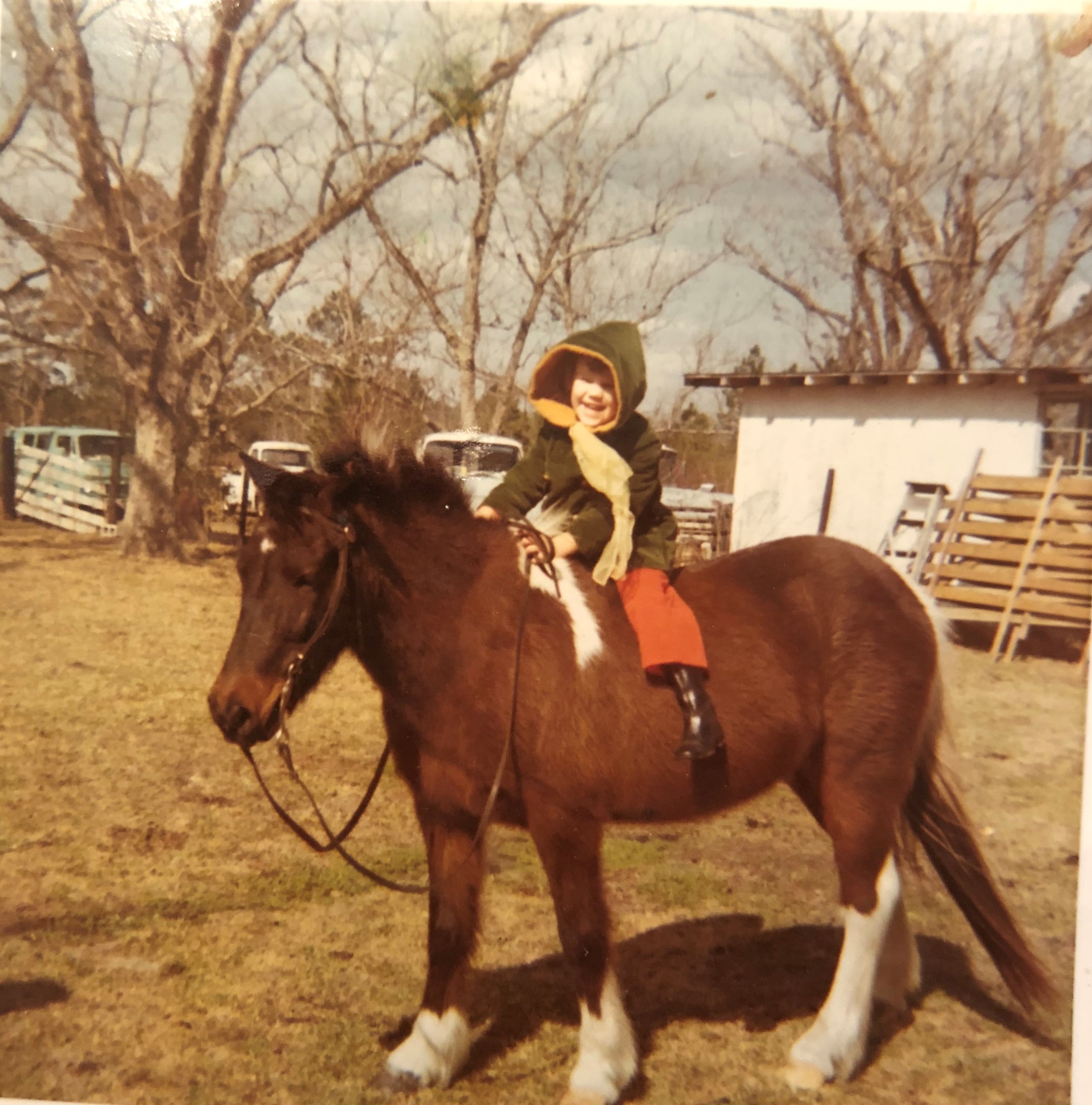 Me on one of Papa's horses.
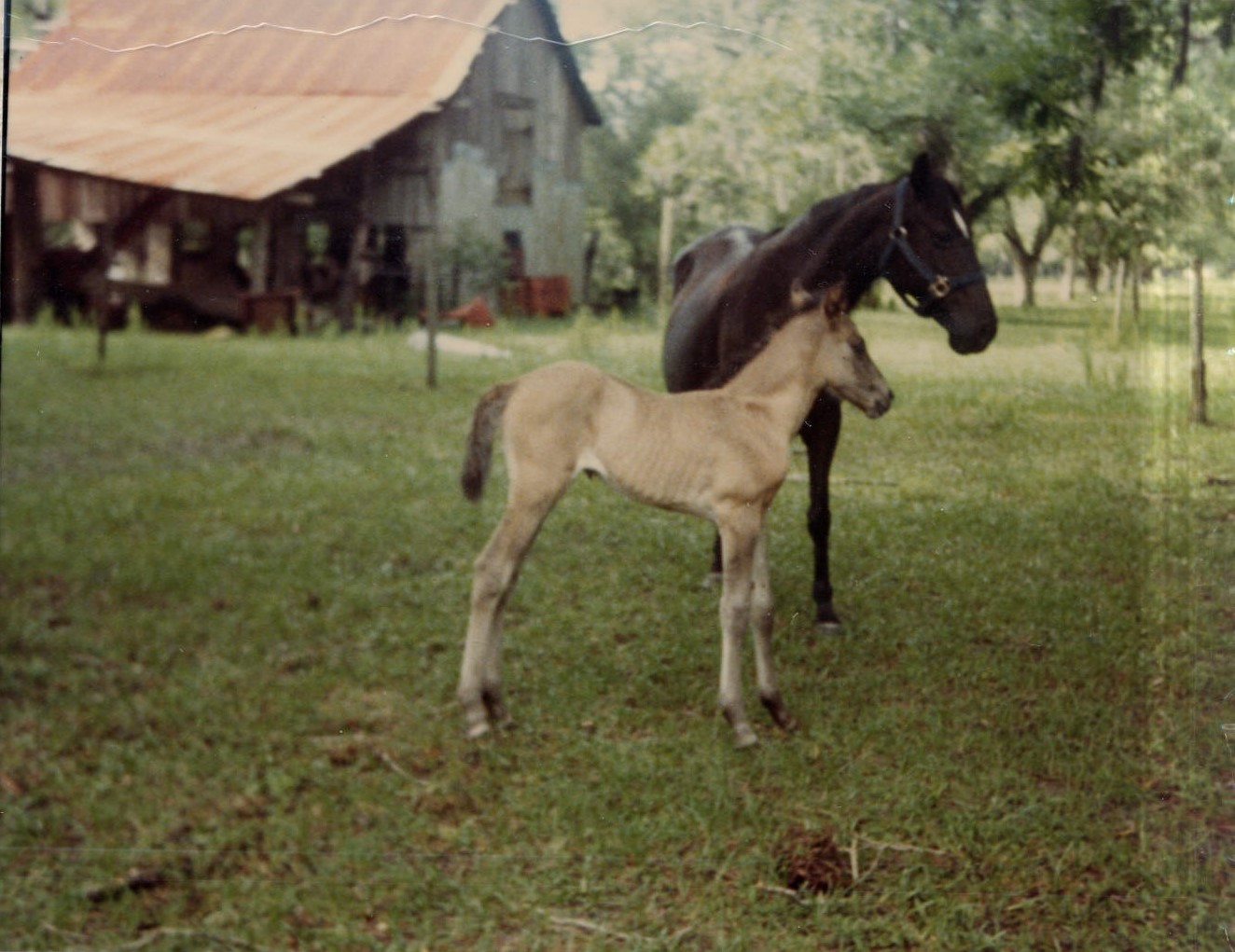 Before my parents purchased the property, my father kept his horse, Satin, here. In the
mid-1980s, Satin gave birth to Buckshot, who would spend his entire life on this land.
Buckshot now rests on the property, alongside our family pets, Duchess, Putter, and Tootsie.
My great-grandmother, Francis Johnson, took this photograph.
Before my parents purchased the property, my father kept his horse, Satin, here. In the
mid-1980s, Satin gave birth to Buckshot, who would spend his entire life on this land.
Buckshot now rests on the property, alongside our family pets, Duchess, Putter, and Tootsie.
My great-grandmother, Francis Johnson, took this photograph.
My earliest memories of the Florida Hawley homestead are bathed in the warm light of late afternoon, the scent of pecans and pine drifting through the air, the sound of laughter echoing across the grove. I can still see my grandfather perched proudly atop his old Ford tractor, the one I was allowed to ride as he made his slow rounds beneath the pecan trees. Those trees were the heart of the property, wide-armed sentinels that shaded family volleyball games (where my over-competitive grandfather often stormed off in a huff), pecan picking, and countless Saturday afternoons spent listening to Florida Gator football games on the crackling radio of his old truck.
It was here that childhood felt endless. We gathered pecans by the bucketful, ran up and down the sandy drive, swung high on the old tire swing, and darted wildly among the azalea bushes that burst into color each spring. When my cousin and I spent the night at my grandparents’ house, we would mischievously jump on the bed until we heard our grandmother’s footsteps approaching, then dive under the covers just in time. Holiday parties, especially Halloween, filled the cool nights with laughter, and hayrides down the dirt road to the old cemetery that added just the right touch of spookiness.
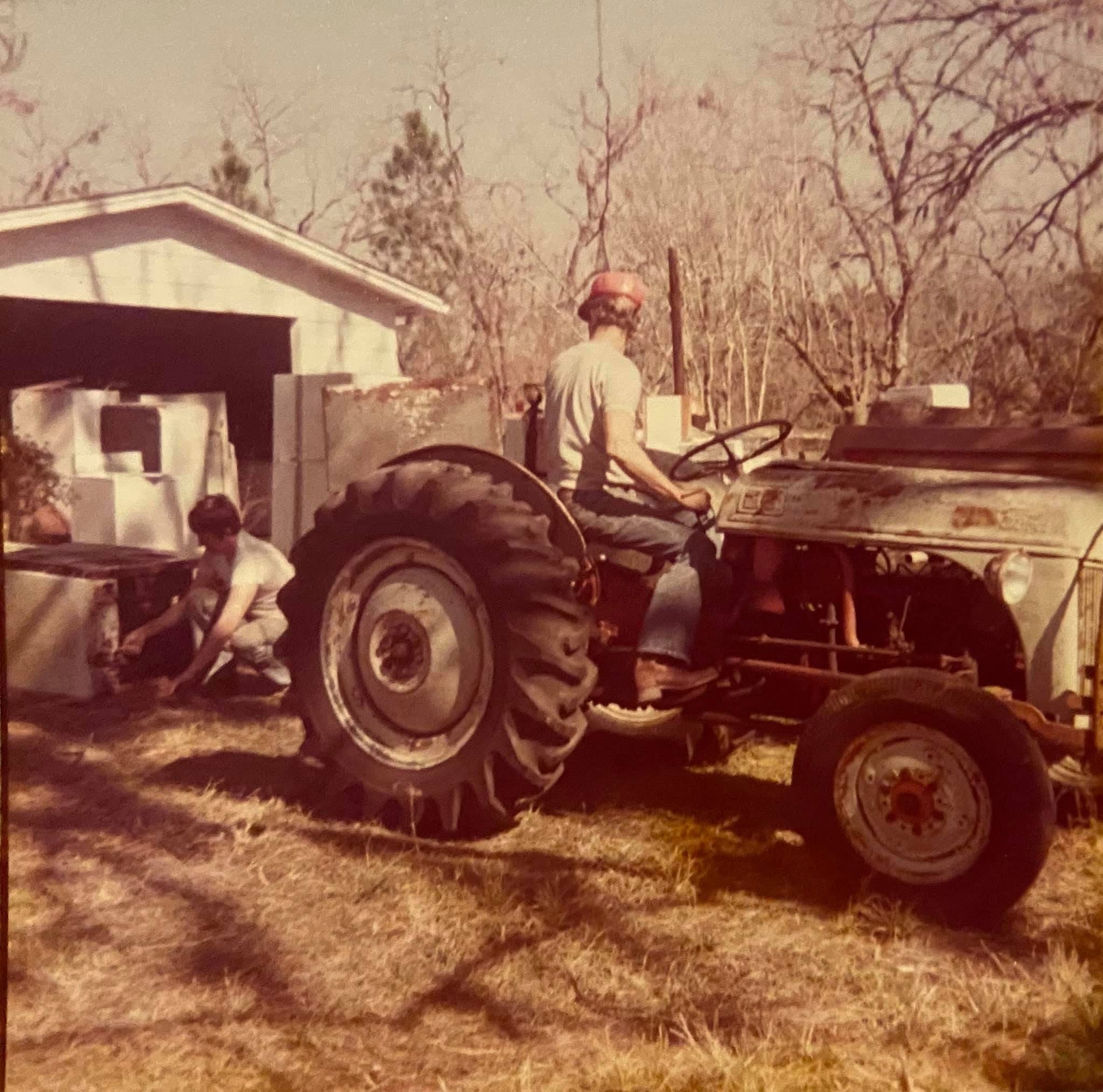 My grandfather (Papa) with his trusted Ford tractor. This tractor gave many a pecan tree a good shake,
making sure no pecan stayed in the tree.
My grandfather (Papa) with his trusted Ford tractor. This tractor gave many a pecan tree a good shake,
making sure no pecan stayed in the tree.
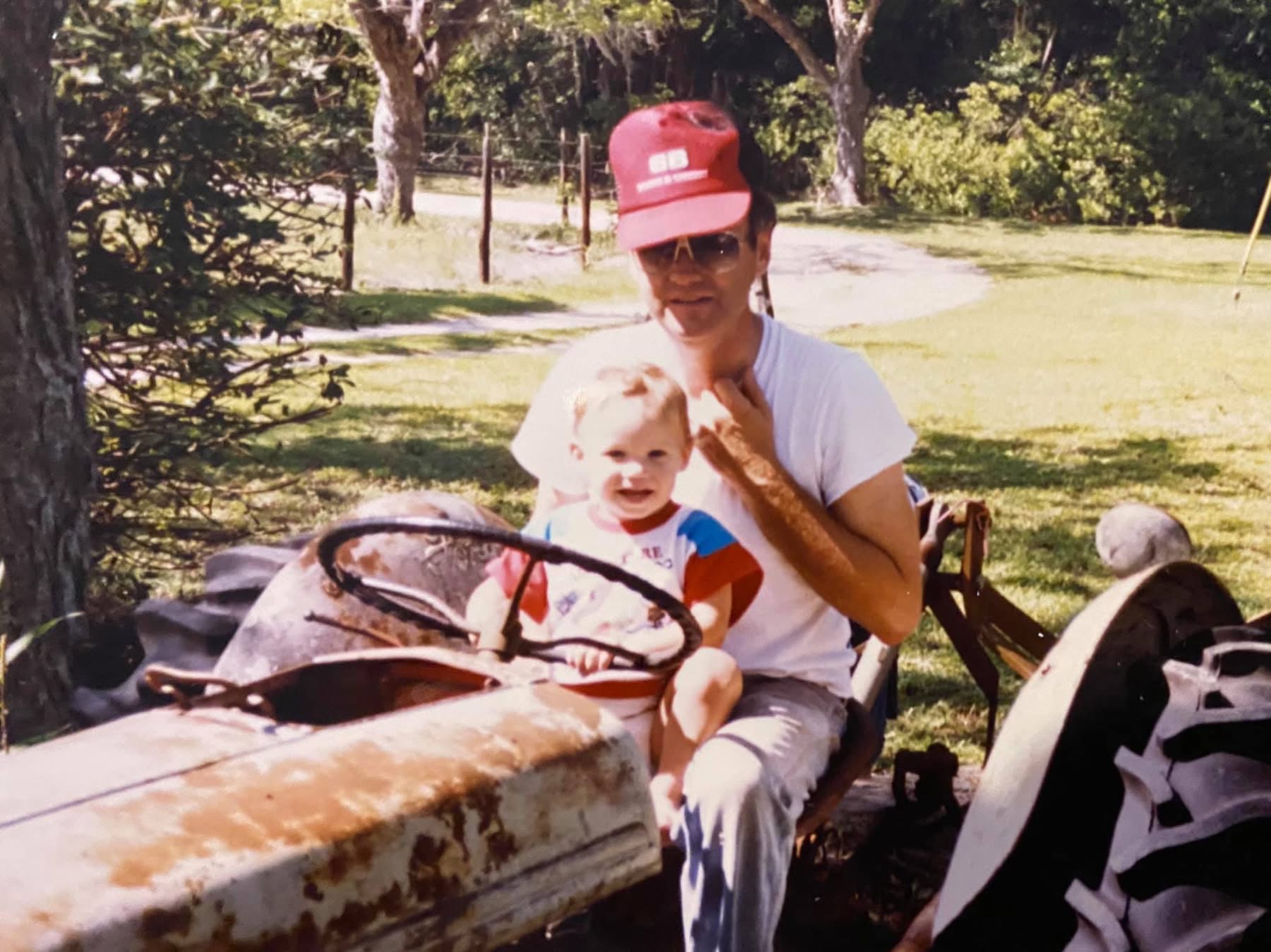 My dad and my son on that same Ford tractor years later.
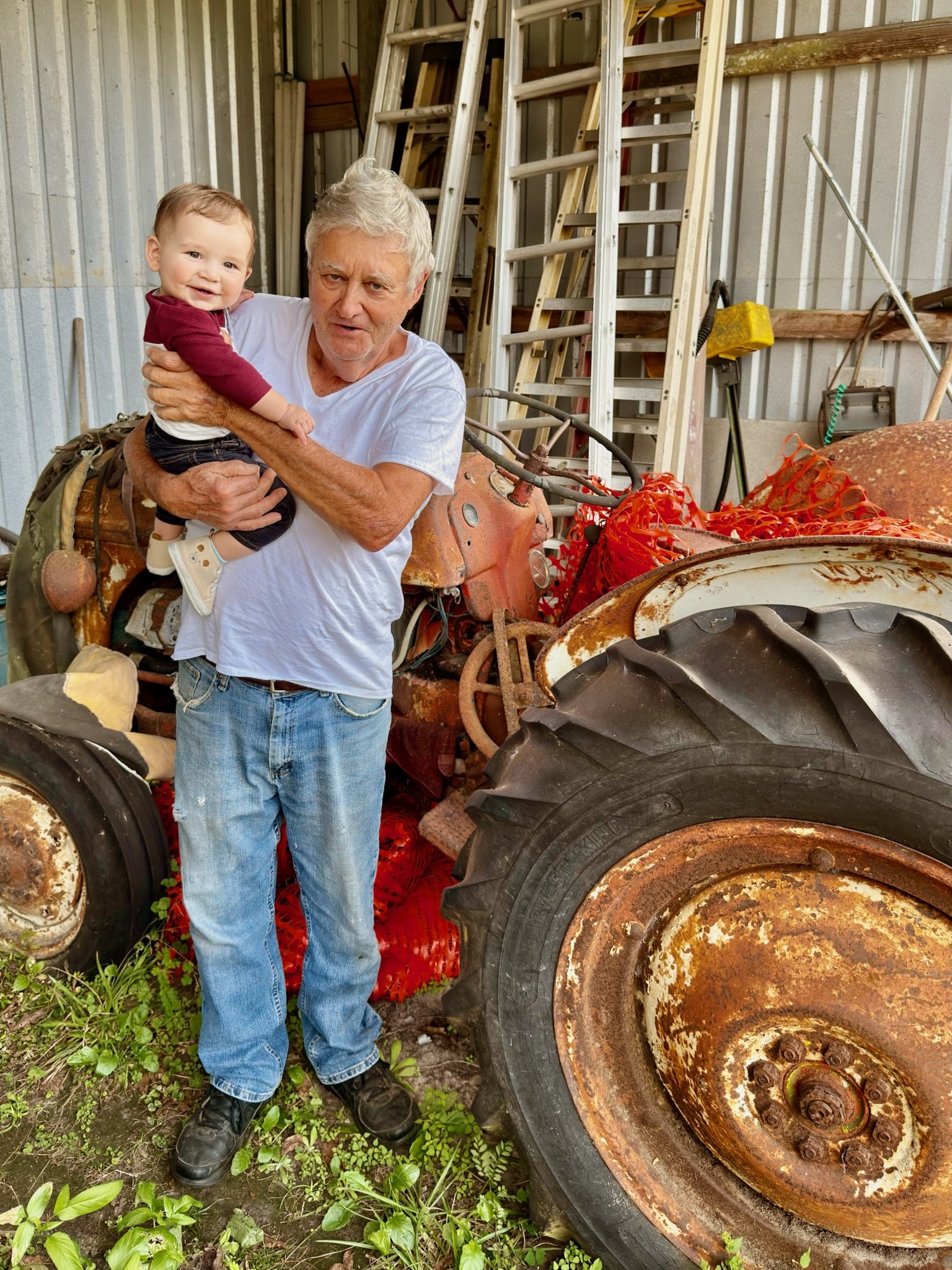 My dad with his great-grandson, five generations linked by one well-loved Ford tractor.
The house perched in the middle of the old pecan grove was weathered when Papa bought it, but he saw its promise. He replaced the siding, built a porch, and slowly shaped the place into a true family home. That front porch became our gathering place in later years, where grandchildren hunted Easter eggs, pitchers of iced tea and lemonade offered relief on summer days, and laughter from family stories drifted through the air, told and retold with fond familiarity.
Each spring, Papa and my grandmother, Delores, worked side by side in their garden, where rows of vegetables filled the table through the season. That garden became their pride, a quiet symbol of care and constancy, to be carried on by my parents when they bought the property. In time, Papa’s son, my uncle, placed a mobile home on the land and raised his own family there, as if the land itself wanted to hold onto us all
When my grandfather passed away in 1986, my father decided to purchase the property. A year later, my parents and I moved out to what had been my grandparents’ home. I was nearly twenty then, soon to be married, and before long, my husband and I followed family tradition, placing our own mobile home on the land and bringing our children into the world beneath the same pecan trees I had once climbed.
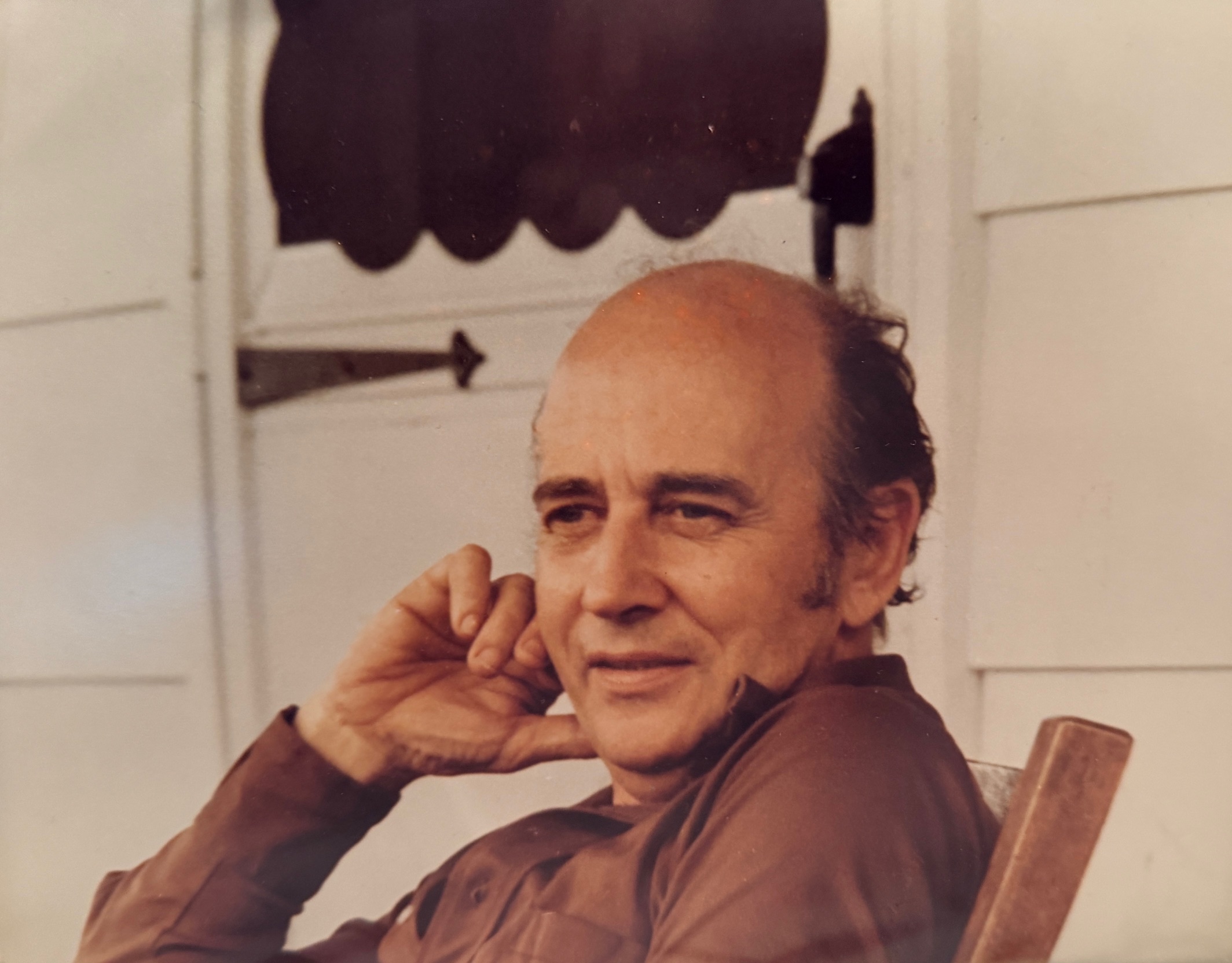 A photo of Papa sitting on the porch in the 1980s.
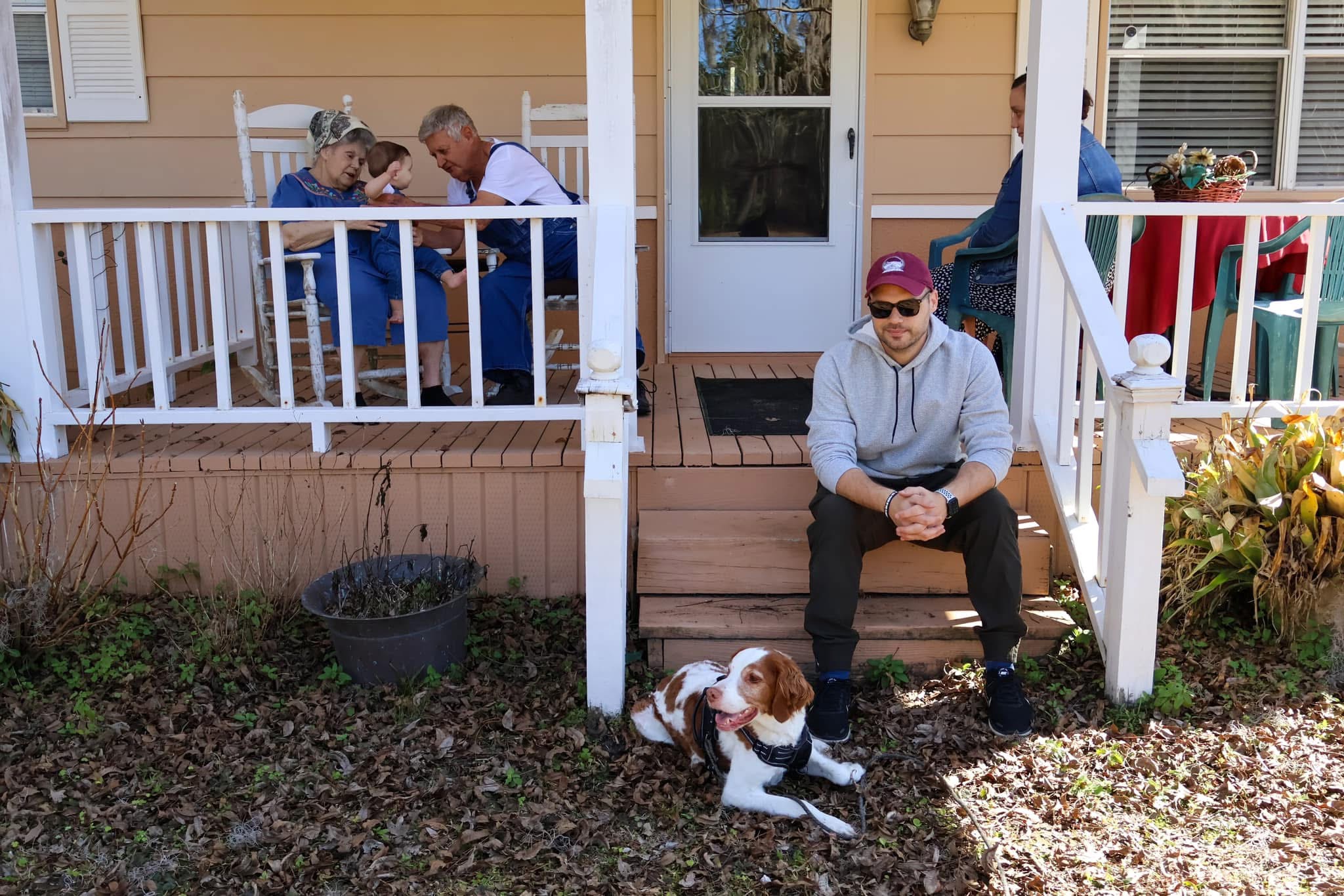 Fast forward to a modern day multi generational porch on an autumn afternoon.
 Four generations.
Now, as my parents prepare to sell this special place, I find myself reflecting on what these acres have meant. It’s more than a stretch of land, it’s a living record of our family’s journey, from New York farms to Midwestern fields to this pecan grove in Florida. The land, in its quiet way, has been both witness and participant in our story. The pecan trees may grow older, the porch quieter, but the spirit of this place, the laughter, the labor, the love, remains rooted, like those trees, deep in the soil of our family’s history.
Standing one last time beneath the old pecan trees, I gazed at Papa’s old tractor and listened to the wind whisper through the branches, breathing in the familiar country air. Every tree and bush seemed to hold a memory, even the rose bush Papa planted, still offering a bloom or two after nearly fifty years, as if time itself refused to let go. Within this land lie the traces of five generations of the Hawley family, woven deep into its roots. In that quiet moment, I realized that while I’ve spent years uncovering the stories of my ancestors, I’ve also been writing my own. It’s also my story, one that has unfolded through learning about my ancestors and shaping a history for my descendants.
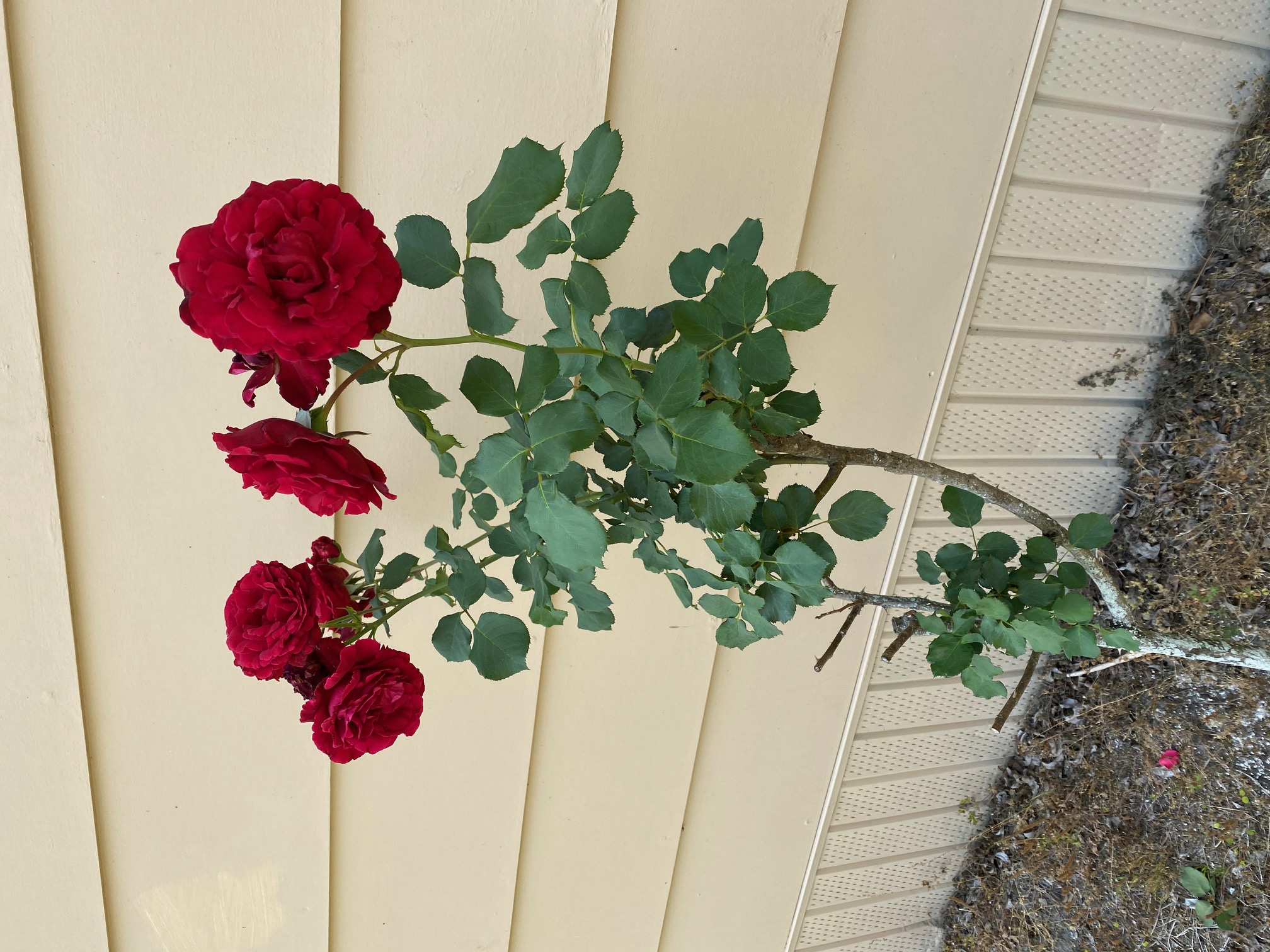 The rose bush that my grandfather planted still bloomed after 50 years.
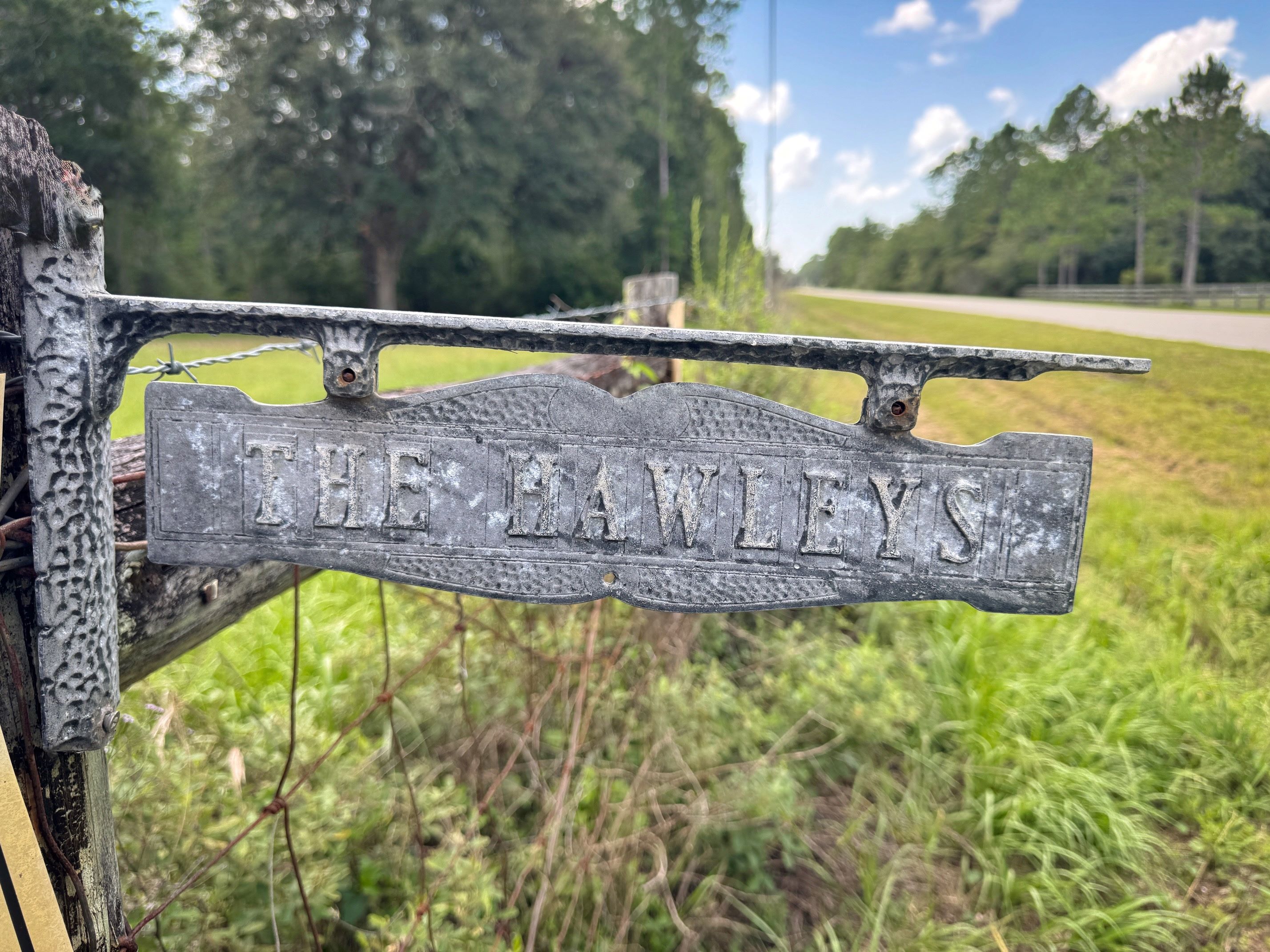 The Hawley's sign that graced the front property line for years. P Marlin 2025
A last walk through of the property by my dad (with audio).
A series of land deeds trace the story of earlier Hawley homesteads, each marking a moment when one generation passed its legacy to the next. In each record, the children of the original owners were often named, their inclusion symbolizing continuity and family connection. My fifth great-grandparents, John and Betsey Hawley, sold their property in Essex County, New York and later in Clarendon, New York before resettling in Michigan. Years later, my fourth great-grandmother, Jerusha Cleveland Hawley, sold the family’s 80 acre farm in Lawton, Michigan following the death of her husband, John. Just prior, my third great grandparents, Martin and Adelaide Richardson Hawley, sold their property near Lawton, Michigan, before resettling in Iowa, then Garnett, Kansas. In turn, my second great-grandmother, Louie Stillwell Hawley, sold the Garnett, Kansas homestead after the passing of her husband, Walter.
Deed 1: John and Betsey (Malbone) Hawley - 5 great-grandparents
Deed 2: John and Jerusha (Cleveland) Hawley - 4th great-grandparents
Deed 3: Martin and Adelaide (Richardson) Hawley - 3rd great-grandparents
Deed 4: Walter and Louis (Stillwell) Hawley - 2nd great-grandparents
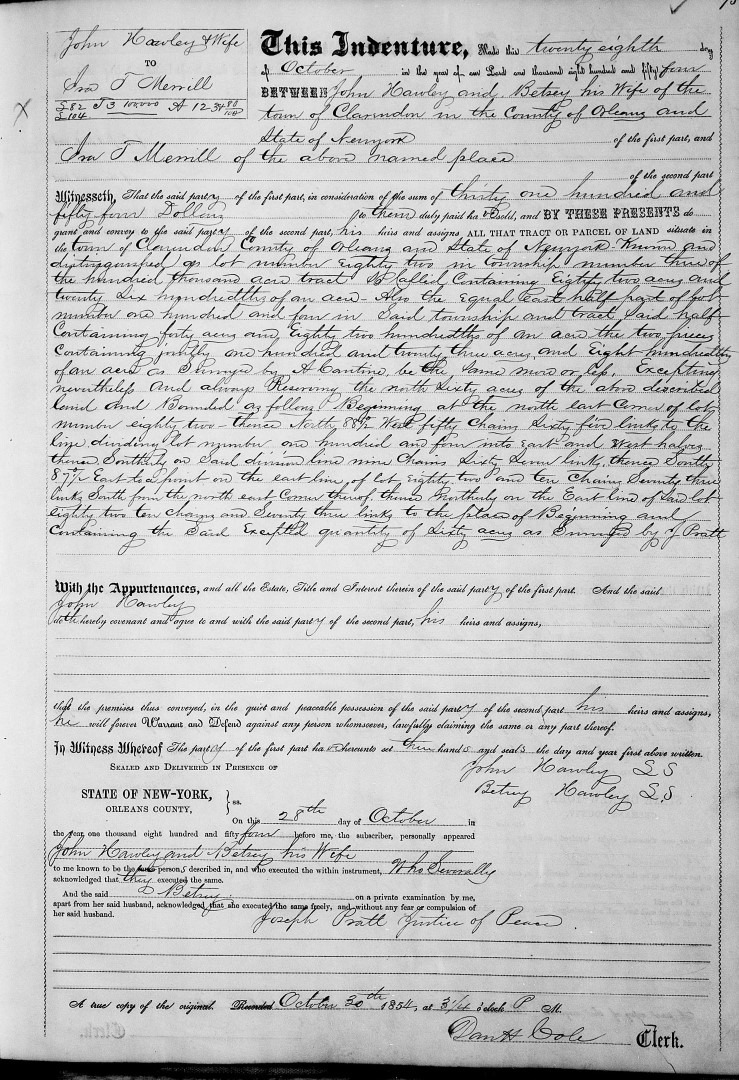 Deed 1: The sell of John and Betsey Hawley's 82 acre farm Clarendon, New York in 1854.
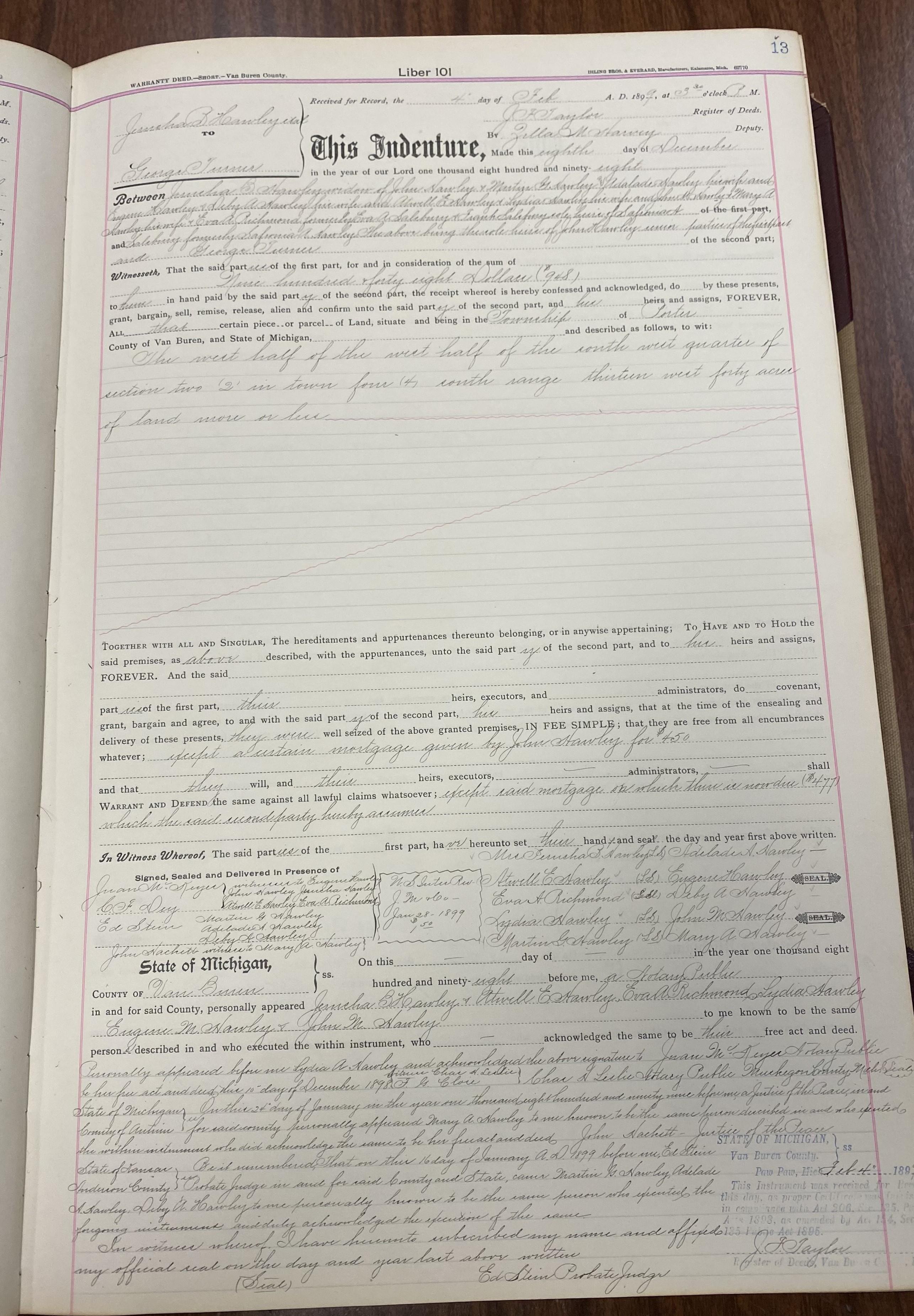 Deed 2: The sell of John and Jerusha Hawley's 80 acre farm near Lawton, Michigan in 1899.
Note all the children's names are listed on the deed as well.
Deed 2: The sell of John and Jerusha Hawley's 80 acre farm near Lawton, Michigan in 1899.
Note all the children's names are listed on the deed as well.
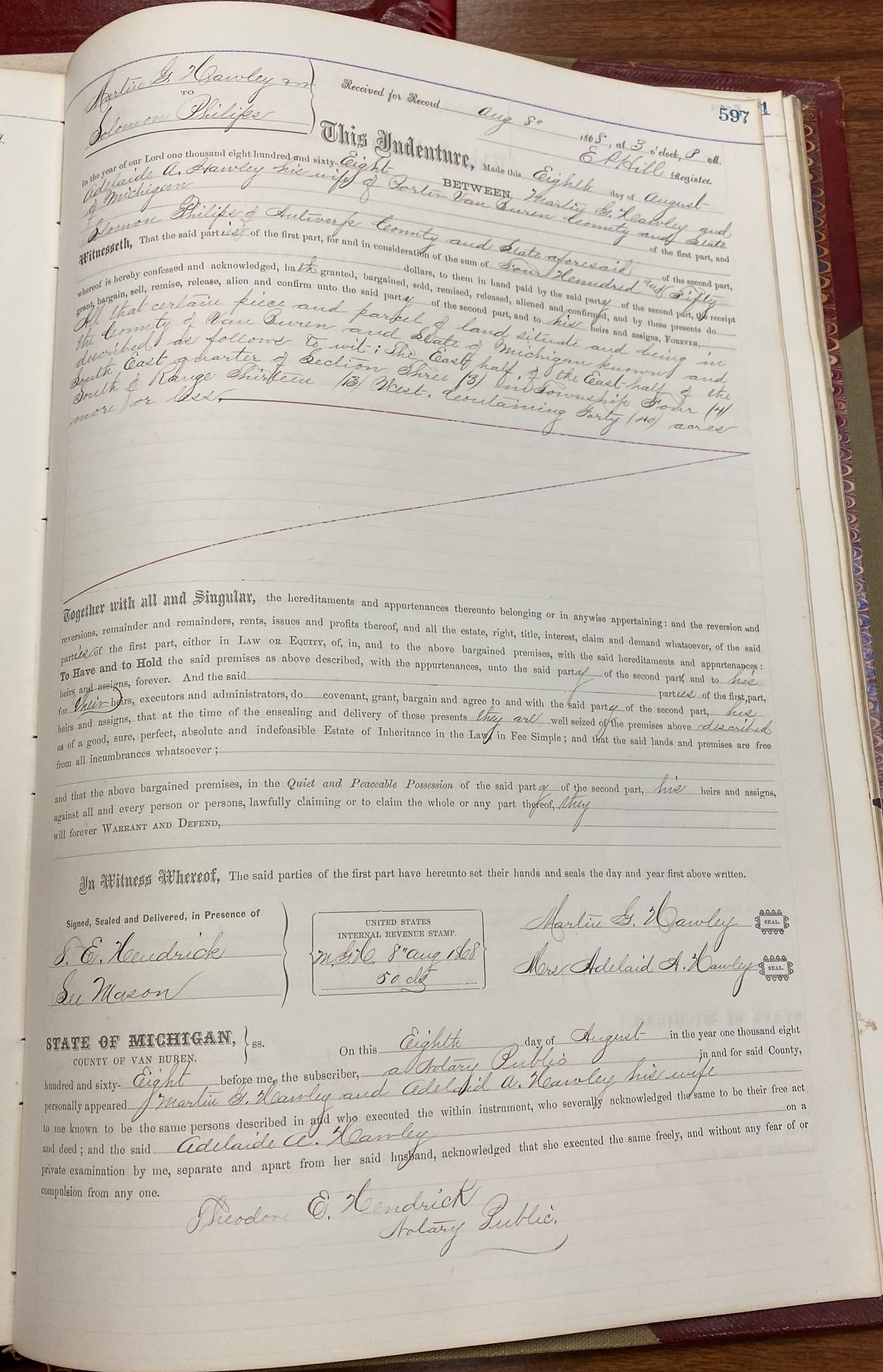 Deed 3: The sell of Martin and Adelaide Hawley's (3rd great-grandparents) farm near Lawton, Michigan in 1868.
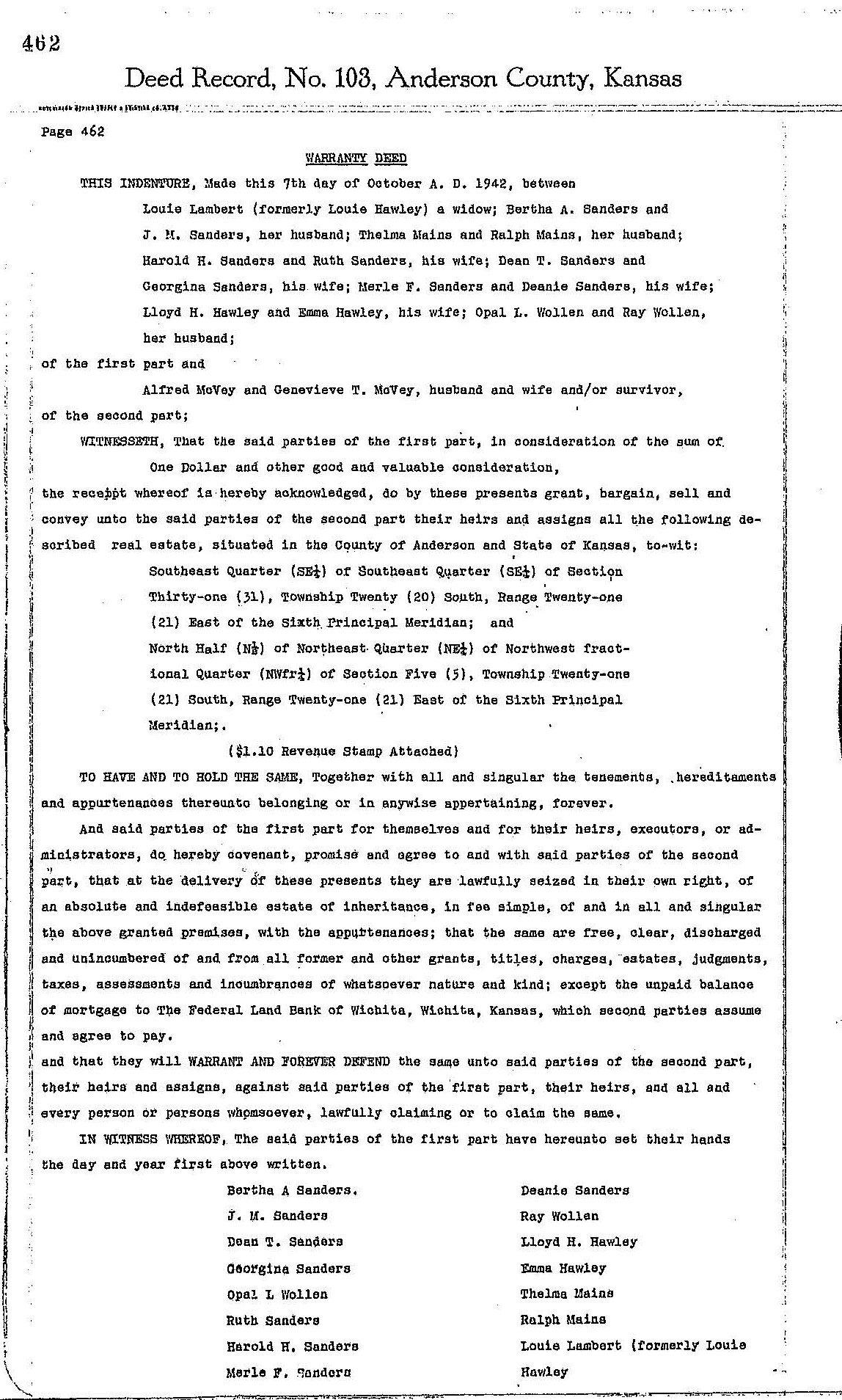 Deed 4: The sell of Walter and Louis Hawley's (2rd great-grandparents) farm near Garnett, Kansas in 1942.
Note all the children's names are listed on the deed as well.
Deed 4: The sell of Walter and Louis Hawley's (2rd great-grandparents) farm near Garnett, Kansas in 1942.
Note all the children's names are listed on the deed as well.